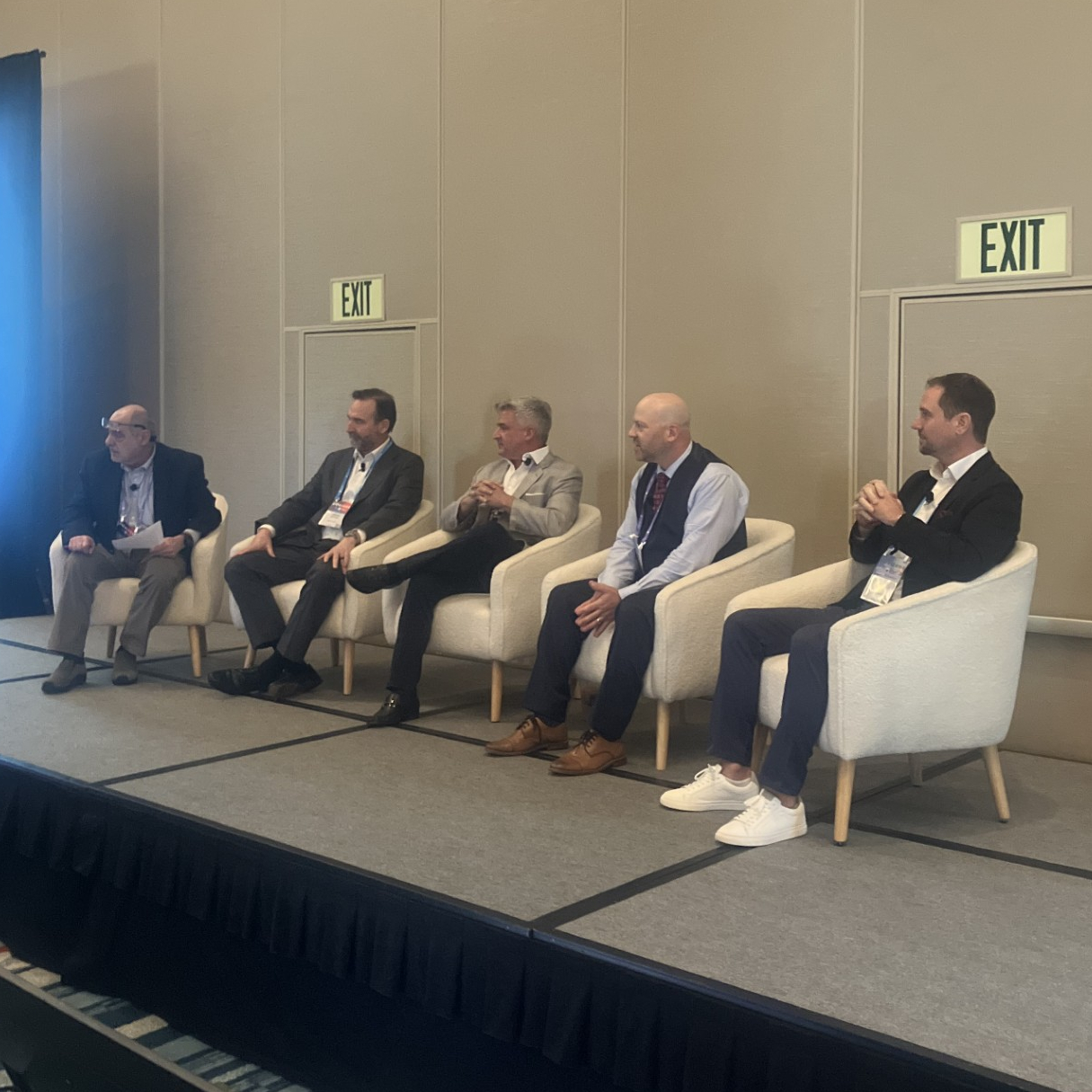
 From left: Robert Powell, editor of finStream.tv; David McKnight, president of Power of Zero; Kevin Knull, CEO of TaxStatus; Jeff Levine, chief planning officer at Focus Partners; and Dave Alison, president of wealth management and founding partner at Prosperity Capital Advisors, on stage at the "From Tax Prep to Lifetime Tax Planning: What Advisors Need to Know Now" panel on Monday, May 4 at the American College of Financial Services' Horizons 2026 retirement planning conference in Orlando, Florida.
Demand for tax planning services from financial advisors will continue to grow, say experts at the American College of Financial Services' Horizons 2026 retirement planning conference.
Kevin Knull, CEO of TaxStatus, said tax planning has been a "massive gap" in the industry for quite a long time.
"The CPAs spend most of the time collecting data and preparing returns," he said. "They don't have the time historically to deliver tax plans."
Meanwhile, Knull said, most advisors haven't spent their career delivering tax planning advice.
"So there's this massive gap paired with this massive need that's going to create some real opportunity for everyone," he said.
That was the focus of the "From Tax Prep to Lifetime Tax Planning: What Advisors Need to Know Now" panel on Monday at the conference in Orlando, Florida. The session was moderated by Robert Powell, editor of finStream.tv, and featured panelists David McKnight, president of Power of Zero; Knull; Jeff Levine, chief planning officer of Focus Partners; and Dave Alison, president of wealth management and founding partner at Prosperity Capital Advisors.
When he sits down to talk with clients about the differences between tax planning, management and preparation, Alison said he uses the analogy of building a house.
"The first thing you're going to do is hire an architect," he said. "That's similar to tax planning."
Hiring the builder to construct that house is where the tax management comes in, said Alison.
"It's the day-to-day implementation, executing on the Roth conversions, the tax law, harvesting charitable giving and income distribution planning," he said.
Once the builder has built the house, an inspector is needed to sign off that it is up to code, said Alison.
"That's like tax preparation," he said.
Building on the house analogy, Levine said clients prefer different architectural styles due to their specific needs.
"Everybody has different assets and income," he said. "Everybody has different goals and passions and things they want."
But what remains the same is that all clients want their advisors to help minimize the amount of tax they pay, said Levine.
"That's one of the reasons why tax planning is one of the great hooks," he said. "That's a common goal that they all share. And there probably isn't a single other thing that unifies all of your clients to that extent."
McKnight said advisors who want to add tax planning to their service offerings should be prepared for how time-intensive it is.
"Put your seatbelt on because this is not a set-it-and-forget-it process," he said. "It requires meeting with clients, sometimes multiple times. This is not like selling an annuity and then kissing them goodbye."
However, McKnight said there is a "blessing" associated with the amount of work tax planning requires.
"You're going to find out about their other assets," he said. "Everything is eventually going to come over to you because you are spending so much time with them."
From left: Robert Powell, David McKnight, Kevin Knull, Jeff Levine, and Dave Alison. Courtesy photo.
© Arc, All Rights Reserved. Request academic re-use from www.copyright.com. All other uses, submit a request to TMSalesOperations@arc-network.com. For more information visit Asset & Logo Licensing.