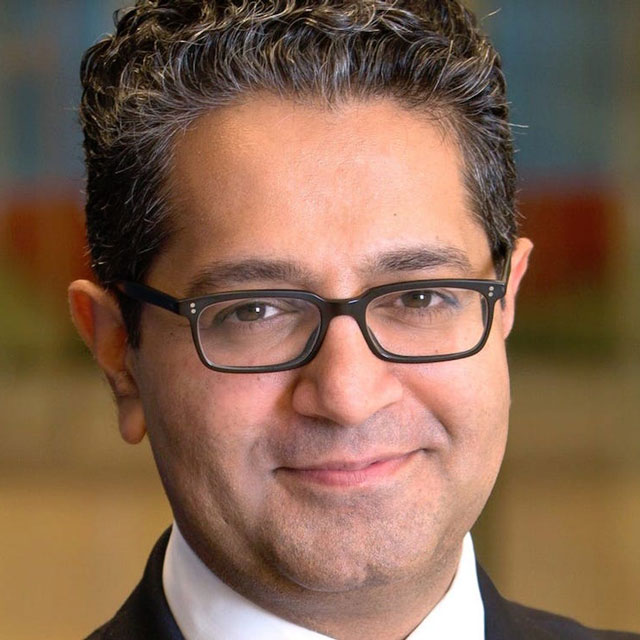
Individual investors are a "great stabilizing force" in the financial markets, Vanguard CEO Salim Ramji said Thursday, noting that around 90% of the firm's clients stayed the course during recent market volatility.
In a wide-ranging interview with Christine Benz, Morningstar's personal finance and retirement planning director, at The Economic Club of New York, Ramji also touched on Vanguard's moves to incorporate artificial intelligence into its offerings, including plans to add AI capabilities to its robo-advice service.
Staying the Course
"By and large, most investors invest for the long term, most of them are diversified, most of them hold steady in times of market volatility, and thankfully most of them pay attention to costs," he said.
About 90% of Vanguard investors stayed the course through the turmoil of President Donald Trump's 2024 tariff announcements and the recent volatility of the Iran war, he said.
The 10% that did trade during volatility "were buyers over sellers by a factor of four to one," he said. "I think individual investors are a great stabilizing force."
Ramji also said that Vanguard will soon publish an annual survey showing that its average investor has increased 401(k) contribution levels to 12%. "Just an extraordinarily high number," he observed. "It's up from about 10% 10 years ago."
Auto-enrollment and default settings in 401(k)s have contributed to investors being a stabilizing force, according to Ramji. He said that retirement plans have been an important foundation for people to get invested early — in a diversified, cost-conscious way.
Private Investments
Turning to the role that private investments might play for clients, Ramji said Vanguard was exploring whether private markets would be part of a recently introduced offering — a guaranteed income option, developed with TIAA, included in employer-sponsored plans.
"We don't have definitive answers today," but Vanguard is assessing manager selection, asset allocation, time horizons and fees, he said. "Because ultimately if we're going to do something in private markets, we're going to do so because we think it's in the investors' interest. Because we think that you can have better longer-term returns if you have a 20-, 30-year horizon to invest in. And if we can't figure that out, we won't."
Regarding the Labor Department's proposal to allow alternative investments in 401(k) plans, talking to clients is key, Ramji said.
"If the regulations allow for it, and most importantly, if our clients really want to do it and we can figure out terms with third parties that make it in our clients' interest, then I think that there's something there.
"But at the same time ... I think the 401(k) system more broadly, it's a marvelous system" that has served more than 100 million Americans well by providing diversified, low-cost, target-date funds, he said. "That's not going to change."
'Exploitation' by Prediction Markets
Ramji voiced concern about Gen Z and millennial investors' involvement with prediction markets. About a third of Gen Zers have either invested in prediction markets or have said they're considering it, he said. As "fun money," for entertainment, he said, that's OK. The problem, he added, is that many are doing it "because they think this is a fast path to financial security. That's a terrible thing.
"I think that you have too many platforms out there that are focused on engagement and not focused on outcomes. You have too many platforms out there, they're looking at gamification," taking a cue from online gambling, and representing speculation as empowerment, Ramji said.
That amounts to "financial exploitation," he said.
"Investors are regulated by securities law," he said. "Gambling is covered by gambling regulations. But as those lines get blurrier, I think it can do certainly harm for the investors, but also harm to faith in the system. ... In gambling activities, the house always wins, the person rarely wins," he said.
Ramji added that it's incumbent on industry participants to be more vocal about the distinctions between investing and gambling.
AI Tools
When it comes to artificial intelligence and investing, clients are telling Vanguard that AI is too eager to please and that they want something that's more trusted, personalized and private, "and we're working on that," Ramji said.
Vanguard is getting positive feedback from its AI-oriented program, Expert Insights, launched this month to 100,000 advisors it serves to help analyze, rebalance and build better personalized client portfolios, he said.
The firm is also updating its website later this year with built-in AI capabilities to provide more guidance on various financial decisions, and is adding AI-driven advice capabilities to its digital advice service for people with as little as $100 to invest. Ramji indicated he was most excited about the AI capabilities to be added to the robo-advice service.
"We're building in a range of AI-driven advice capabilities into that because the way I look at the opportunity for us and for our clients is that advice today is just as rarefied as investing was 50 years ago, and if we can be able to help people, whether they have $100 or $1,000 or $100,000, to be able to get better advice, make better decisions ... it helps us make advice just as accessible as an index fund is today," Ramji said.
© Arc, All Rights Reserved. Request academic re-use from www.copyright.com. All other uses, submit a request to TMSalesOperations@arc-network.com. For more information visit Asset & Logo Licensing.