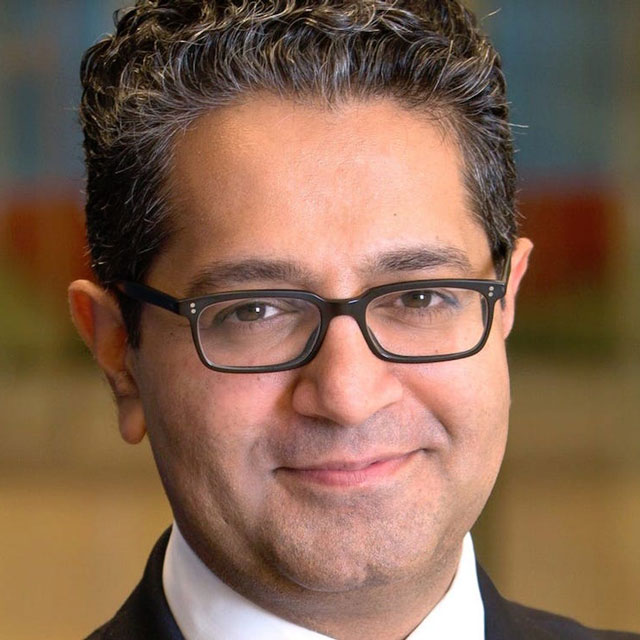
Developments at Vanguard Group appear to be going "so far, so good" nearly two years after Salim Ramji took over as CEO, a Morningstar analyst says.
Ramji, a former BlackRock executive and the first Vanguard outsider to become CEO, assumed the job in July 2024.
"I'd say he's been pretty busy compared to past CEOs. We're seeing a lot of stuff come out," Daniel Sotiroff, associate director, ETF & passive strategies research at Morningstar, said on the research firm's Investing Insights podcast Friday, the first in a two-part conversation.
"A lot of the stuff we've seen has been very Vanguard-like, some of it expected, some of it unexpected, like the fee cuts," he added.
Morningstar gives Vanguard a "5" on a scale where 1 is low and 5 is high, Sotiroff said.
"There's not too many asset management firms that get that rating. So that rating is sticking until we see substantial enough evidence to to change our minds on that," he said.
Vanguard last year added 15 exchange-traded funds — mostly fixed income — among its busiest year for ETF launches, Sotiroff noted.
He called Vanguard's sweeping fee cuts a "nice surprise, and not an insignificant amount of money that they're giving up over the coming years."
Over roughly the past two years, Vanguard reduced fees on most fund offerings, totaling nearly $600 million in savings for investors, the firm's largest two-year cost reduction. Vanguard in February said its products across all asset classes and styles reached a 0.06% average expense ratio.
At the time, the giant asset manager had announced another round of fee cuts, trimming expense ratios for 84 mutual fund and ETF share classes across 53 funds, amounting to nearly $250 million in fee reductions in 2026. The cuts affected 25% of Vanguard funds across all asset classes, lowering fees by an average 27%.
Vanguard hasn't said much yet about private assets, the analyst noted. The health of private credit markets has become a concern for economists and the financial services industry.
"They just haven't come out with a lot of stuff yet. So, we're kind of in wait-and-see mode there," Sotiroff said.
The analyst also said that investors shouldn't be concerned about Vanguard's recent move to split into two advisory businesses, although Morningstar doesn't know exactly why the asset manager did so.
"They were short on details on that, but I have to believe there's some technical reason in the background they're doing this. So, I'm not worried about this if if I'm an investor. And both of them report into Greg Davis (president and chief investment officer) at the end of the day. So, it's still more or less one entity," Sotiroff said.
The analyst also touched on the Securities and Exchange Commission's $19.5 million fine for Vanguard last year for failing to disclose certain conflicts of interest related to advisor compensation.
While it didn't look good, Sotiroff suggested that Vanguard didn't intend any harm.
"This sounded like a fairly basic conflict of interest when you when you think about how advisory businesses work. You know, I think every financial adviser naturally has an incentive to retain clients and want to get new clients, so it looks kind of like an unforced error on Vanguard's part. It looks like they made a mistake," he said.
"As an analyst, when I look at these things ... are they repeat offenders? Are they constantly running into mistakes or are they sort of like flirting with some regulatory lines that maybe they just shouldn't be in the first place? We didn't see any of that," and Vanguard corrected the issue, he said.
"It's not great, but you know, it is what it is. And when you get into large asset managers like this, every once in a while you do see these things pop up. It's not intentional. They're not trying to harm anybody. It's a mistake."
© Arc, All Rights Reserved. Request academic re-use from www.copyright.com. All other uses, submit a request to TMSalesOperations@arc-network.com. For more information visit Asset & Logo Licensing.