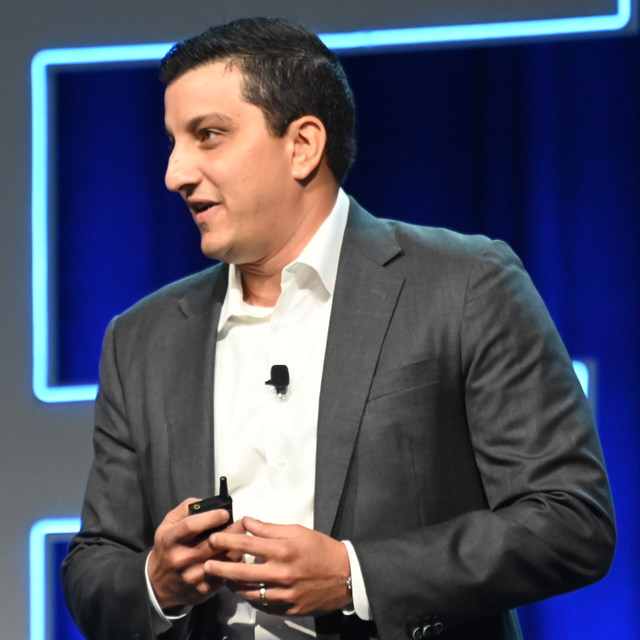
Artificial intelligence is good for wealth managers, Raymond James CEO Paul Shoukry told investors Monday, noting recent market concern about AI's potential to harm the industry.
"I would tell you that the wealth management industry needs these AI-driven solutions to help advisors better serve their clients, to help advisors get both more scale in their business, to serve more clients and more assets" and provide more bespoke, customized and holistic advice than they ever have, Shoukry said at the firm's institutional investor conference, according to a transcript.
"So these AI solutions actually help the wealth management business evolve" and provide more sophisticated holistic advice while doing so for more clients, he added. Shoukry cited the rising demand for human financial advice, advisor demographics — new versus existing professionals — and a McKinsey report from last year warning that AI technology will help prevent a massive advisor shortage.
Based on current advisor productivity levels, McKinsey & Co. estimated that the industry will face a shortage of roughly 100,000 advisors by 2034.
"And so to solve that shortage, we need the AI solutions, which is why we're investing over $1 billion in technology and looking at all of these solutions going forward," Shoukry said. "So we're really excited about the opportunities that AI will have for the industry, not just in wealth management, but across all of our businesses going forward."
Raymond James recently launched a generative AI agent, Rai, in pilot mode and plans to expand it to all its businesses, Shoukry said, adding that the firm is also "looking to partner with vendors that provide specialty AI solutions."
The company says it spends over $1 billion a year on technology.
Last month, wealth management stocks, including Raymond James', slid after Altruist introduced an AI tool designed to develop tax-planning strategies. The stock is down about 7% from a month ago.
Since the Altruist launch, other wealth management leaders have expressed the view that technology will augment, not replace, human advisors.
Jed Finn, head of wealth management at Morgan Stanley, pointed out at a recent UBS conference that firms have been using AI for years and that his firm has developed about 3,500 AI-based planning tools. "An individual tool is a tiny part of the capability ecosystem that is required to help clients achieve their goals," he said.
Bill Crager, co-founder and former CEO of the wealthtech firm Envestnet, recently issued a white paper on AI, commenting on LinkedIn that he doesn't see the technology disrupting "the advisor sitting across from someone," but rather "lifting the operational weight that has been burying advisory firms for years."
AI "doesn't replace ... judgment and it doesn't replace trust. It doesn't replace the human dynamic that sits at the center of financial advice," wrote Crager, who is now a founding partner of the private-markets platform iAltA. "AI is only as effective as the data underneath it. And most RIA firms haven't built that layer yet."
© Arc, All Rights Reserved. Request academic re-use from www.copyright.com. All other uses, submit a request to TMSalesOperations@arc-network.com. For more information visit Asset & Logo Licensing.