 Jimmy Buffett, left, and Jane Slagsvol, right, arrive at the Vanity Fair Oscar Party on Sunday, March 12, 2023, at the Wallis Annenberg Center for the Performing Arts in Beverly Hills, California. Photo: Evan Agostini/Invision/AP
When it comes to estate planning for families with significant wealth and a large public presence, the stakes couldn’t be higher.
Successful estate planning in such cases is not just about avoiding taxes or keeping things private. In many cases, it’s about keeping the peace among a significant number of stakeholders, including current or former spouses, heirs, business associates and more distant relations.
The same is true in more mundane cases involving less public scrutiny and fewer assets, experts agree, and the only real remedy is clear-eyed planning and guidance from qualified, objective experts. It’s also important to avoid the temptation of believing that one’s own family is somehow different and above fighting about money.
The truth is that surprise and disappointment regarding inheritance issues can divide even the tightest-knit families, and the sums of money or property involved don’t have to be great to cause serious strife. All the more reason wealthy celebrities can struggle with estate planning.
See the list for a review of public estate planning fights that we can all learn a lesson from, drawn from new and prior ThinkAdvisor reporting and outside legal sources cited below.
1. Jimmy Buffett

Jimmy Buffett was beloved for writing upbeat music about the lighter side of life, but behind the laid-back public persona was a shrewd businessman who used his fame to develop restaurants, casinos, beer brands, real estate holdings and even a radio station.
The "Margaritaville" singer amassed a $275 million fortune before his death in September 2023. Media reports at the time suggested that Buffett had written a will more than 30 years prior that was updated on multiple occasions. The final version directed most of his assets be placed in a marital trust for the sole benefit of his wife, with his three children being named as the remainder beneficiaries upon her death.
Alongside his wife, Jane, Buffett appointed Richard Mozenter, his longtime accountant and business manager, as a co-trustee. It may have been a reasonable decision at the time, but the recent filing of counter-lawsuits in Florida and California show just how thorny estate planning can be in practice.
In the filings, Jane Buffett alleges that Mozenter has been “openly hostile and adversarial” toward her and has refused to give her details on the trust and its financials. She also alleges that Mozenter is collecting “excessive fees” and mismanaging trust assets. Mozenter’s suit disputes those allegations, instead arguing that Jane Buffett has interfered in business decisions and refused to collaborate in trust management out of self-interest.
As the Buffet case shows, a proper estate plan does more than divide up assets. Instead, it lays out a roadmap for how decisions will be made and who will be steering the ship when the original owner is no longer at the helm. Without that kind of thoughtful planning — and clear communication of the plan — families can end up in conflict — and in court.
It remains to be seen what will happen in the Buffett case, but the early indications point to a protracted and potentially ugly court battle.
2. Jerry Lee Lewis

Jerry Lee Lewis died in October 2022, leaving a large legacy and a multimillion-dollar estate.
As noted in an analysis published by the DuPont Law Group, Lewis is survived by his seventh wife, Judith Coghlan Lewis. He also had six children — four of which are living.
In the years before his death, Lewis had a public feud with his daughter Phoebe and her husband, Ezekiel Loftin. In 2017, Lewis sued Phoebe and Loftin for allegedly taking financial advantage of him, although the suit was later dismissed.
As the analysis suggests, it’s a safe bet that Phoebe was disinherited, a move that is legal under Mississippi law. But exactly what decisions Lewis may have made on distributing his assets to his widow or ex-wives, or to his other children, are publicly unknown.
Despite filing for bankruptcy in 1988, Lewis died with a hefty fortune. His net worth was estimated to be between $10 million and $15.4 million, according to the DuPont report. If Lewis did not have a will, then intestate law dictates that his spouse is the primary beneficiary of his estate.
“Celebrities are not immune to making this mistake,” the analysis notes. “There have been many celebrities who have died without even a basic will. Assuming Lewis had a will, he still could have left everything to his wife. Or, he could have left her a portion of his wealth. This money could either be given to her outright or set up in a trust to be distributed over time.”
As the estate planning attorney Kevin Ghassomian previously told ThinkAdvisor, managing such a trust is a serious job.
“You need someone with sound judgment, thick skin, and the ability to act with precision when things get messy,” Ghassomian said. “Too often, people choose trustees the same way they’d pick someone to watch their dog for the weekend. They choose someone they like and trust.”
Often, Ghassomian said, an independent and objective trustee makes for a better choice.
3. Mickey Rooney
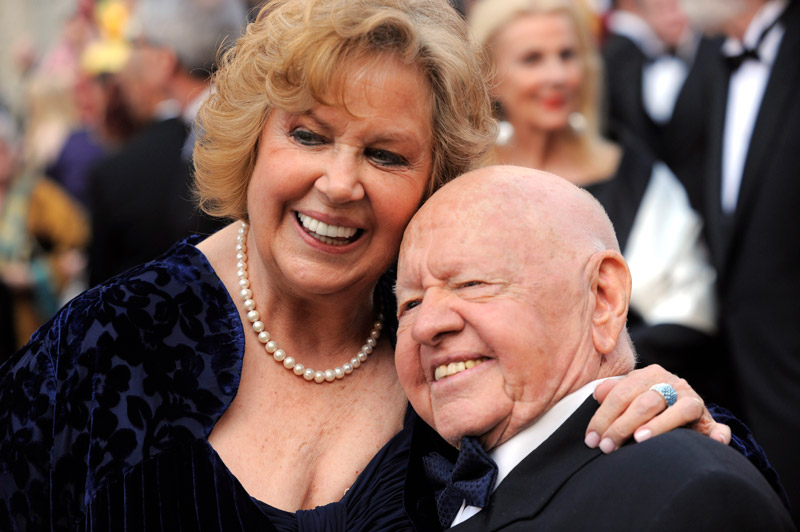
As detailed in an analysis published by the law firm Holland and Knight, the well-known actor Mickey Rooney was living in poverty near the end of his life — despite having more than 300 films to his credit.
This was the case, the law firm maintains, because several family members in charge of his affairs misappropriated Rooney’s financial assets. A stepson and his wife were accused of converting millions of dollars of Rooney's assets to their own use over a 10-year period.
Litigation ensued, in which Rooney was represented by attorneys with the firm. After a legal battle, Holland & Knight obtained a $2.8 million stipulated judgment for Rooney in an elder abuse lawsuit against his stepson.
When Rooney died in 2014 at age 93, his will bequeathed his entire estate to a different stepson and his wife who took care of him during the last years of his life. While Rooney left only $18,000 in assets, the intellectual property rights to his name had potential value.
As such, the will was challenged by seven of Rooney's eight natural children, as well as his estranged wife from his eighth marriage. The Holland and Knight team prevailed against the challenges and submitted his will to probate in August 2015. As a result, the income earned from his intellectual property is being used to repay the debts of his estate and for the benefit of the stepson and his wife who were the estate's beneficiaries.
As the analysis notes, elder abuse is a real risk in the estate planning process, and even the presence of a will doesn’t guarantee that litigation won’t be filed by family members or other stakeholders who feel spurned.
4. Tony Curtis
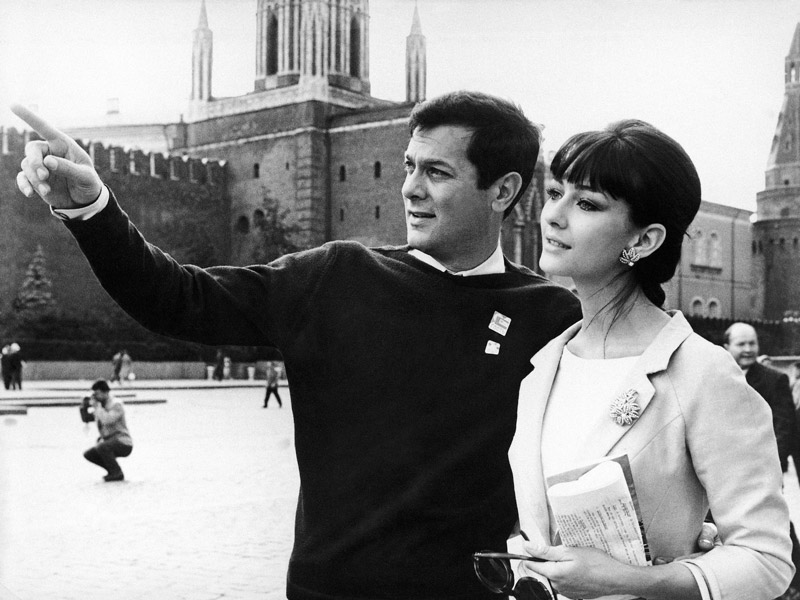
Nearly 15 years ago, Inside Edition broke the news that Tony Curtis, who died in September 2010, had disinherited his children — including actress Jamie Lee Curtis — in his will.
While the decision did not result in a protracted legal battle, it did generate a lot of negative and likely painful attention from the tabloids, according to a recently updated analysis written by the probate attorney Daniel Printz.
“I haven’t personally seen the will, so I don’t know whether Inside Edition is correct” in implying that Curtis left nothing to his children, Printz wrote. “After all, he could have easily provided for them in other ways (life insurance, direct beneficiary investment accounts, etc.).”
Assuming that they are correct, what Printz finds “astonishing” is not that he disinherited his children. That happens often enough. Rather, the surprising fact is that Tony Curtis chose to do so publicly when it would have been easy to privately leave his estate to his widow, Jill Vandenberg Curtis.
According to Inside Edition, Tony Curtis wrote the following in his will: “I acknowledge the existence of my children … and have intentionally and with full knowledge chosen not to provide for them.”
“[Tony] Curtis could have accomplished the exact same thing, disinheriting his children and leaving his entire estate to his wife, and done it privately, without his widow and children being exposed to our prying eyes,” Printz noted.
Likewise, Printz observed, if Tony Curtis had made a trust, then his will would simply direct that his entire estate be distributed to the trust.
“Then, in the trust document, which would remain private, he could direct that everything be distributed to his wife. Voila!” Printz said. “The exact same result, but without dragging the family through the tabloid mud. After all, it’s really none of our business.”
Furthermore, by using a trust, he could have easily left something to his favorite charities, to particular friends, or to his grandchildren or great-grandchildren.
“It begs the question: was the omission intentional?” Printz asked. “Did he actually desire this result, or did he just not ask anyone’s advice? I think it was the latter — most people simply don’t know the right questions to ask.”
At top: Jimmy Buffett and his wife, Jane Buffett. Credit: Evan Agostini/Invision/AP
© Arc, All Rights Reserved. Request academic re-use from www.copyright.com. All other uses, submit a request to TMSalesOperations@arc-network.com. For more information visit Asset & Logo Licensing.