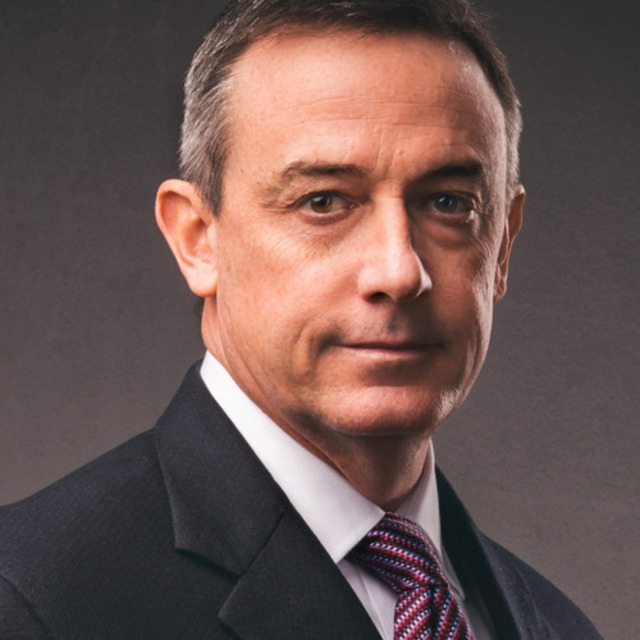
 Jerry Patterson, head of advanced wealth solutions at Cetera
It's well-established that growth-oriented wealth management firms are seeking to expand their suite of offerings to help advisors better serve high-net-worth and ultra-high-net-worth clients. Another big focus for firms is bridging the gap between retail wealth management and workplace retirement plans to grow their total addressable market.
The Cetera Financial Group network of independent advisory firms is pursuing both goals, which is one reason it hired Jerry Patterson, a former Fidelity and Principal executive, to head its advance wealth solutions team last year.
At the time, Cetera’s outgoing CEO, Adam Antoniades, tasked Patterson with elevating the firm’s insurance solutions and expanding its workplace and retirement offerings in collaboration with Jon Anderson and Mike Durbin, who took over for Antoniades at the beginning of 2025.
In a conversation with ThinkAdvisor, Patterson said the transition to Cetera has been “outstanding,” offering challenges and successes.
“Cetera has a strong management team, great culture, clear strategy and a broad and diverse ecosystem of approximately 12,000 financial professionals and institutions focused on helping clients attain important financial goals,” Patterson said.
So far, Patterson added, his experience on the recordkeeping side has been highly transferable in supporting Cetera’s expansion into workplace retirement plans.
“I am responsible for helping Cetera advisors support small-business owners broadly and the retirement plan needs of their institutional clients,” he explained. “Choosing — and partnering with — the right recordkeeper is essential to that process.”
Here are additional highlights from our conversation, edited for length and clarity:
THINKADVISOR: I know you are also an attorney and that you started your career working directly with advisors on estate planning issues. How much are you able to draw on that experience today, and what are some of the ways the estate planning topic has evolved over the course of your career?
JERRY PATTERSON: Estate planning, business succession planning, philanthropy and tax policy are important topics to many of the wealth clients that Cetera advisors serve. I make it a point to stay current on the planning trends and strategies related to these topics and on equipping our advisors with the products, services, tools and support they need to help their clients navigate them.
I have also spent a considerable amount of time in Washington supporting industry groups, such as the Insured Retirement Institute, where I serve on the board of directors. These groups are sharply focused on promoting policies that expand access to workplace retirement plans and help Americans save and prepare for retirement.
THINKADVISOR: We’ve written about the “convergence” of wealth and retirement — with more private wealth management firms seeing opportunity in upping their retirement plan capabilities as a means of better serving clients and expanding their scope of services. How do you view that trend and what does it mean for Cetera?
PATTERSON: More Americans are gravitating to wealth firms and advisory solutions where advisors offer planning services and fee arrangements that support a positive and ongoing lifelong relationship between the advisor and client. This is a very positive trend for America’s savers. For many Americans, their retirement plan benefits are the lion’s share of their retirement nest egg.
There is a belief that the wealth industry needs to offer education, services and support that enable clients to bring together all their savings, irrespective of account type, under a single planning umbrella and strategy. The “convergence” trend is focused on bringing all a client’s needs together under a unified, comprehensive financial plan.
We still have a long way to go, but it is great to see the industry rallying around this trend — and creating business models and planning processes that can be delivered at scale.
THINKADVISOR: What’s one thing that makes you optimistic about Americans’ ability to prepare successfully for retirement? What’s one thing that worries you?
PATTERSON: The emergence of fee-based advisory solutions is creating lifelong, ongoing connections between advisors and their clients. In a world with fewer defined benefit pension plans and more onus on the individual to architect their own retirement, increasing the number of wealth advisors focused on comprehensive financial planning is critical to help clients establish and reach their financial goals.
I worry about gaps in protection solutions, such as life, disability and long-term care insurance. These solutions serve as foundational tools for ensuring long-term financial security. We strive to help advisors understand how to talk to clients about the importance of these solutions, and to implement them when and where appropriate.
The encouraging news is that the market continues to evolve, offering a broader array of solutions with greater flexibility, transparency and competitive pricing — giving clients more choice than ever before.
THINKADVISOR: Have you encountered clients who are financially prepared for retirement but not prepared from a behavioral or emotional perspective? What can advisors do to help them successfully navigate that transition? How important is building a sustainable — and understandable — income plan?
PATTERSON: For sure. Many clients have the financial means to stop working, yet at the same time, many of them are not prepared to live a life without working.
Advisors can play an important and impactful role in helping clients navigate these dynamics. If travel is a core interest, an advisor can help clients develop a travel plan with goals and a budget aligned with their income plan. If a client wants to start a business or take on a second job, an advisor can play an important role in the brainstorming and planning as the client explores options.
Financial advisors can also help their clients develop the courage to spend their money. Many clients retire with plenty of money but live in fear of running out of it. An advisor is uniquely positioned to help clients develop the confidence to spend responsibly, in alignment with their financial plan, and enjoy the fruits of their labor.
THINKADVISOR: Finally, have you spent much time thinking about your own retirement and what that might look like one day? Are you a person who is drawn to guaranteed income or do you like a risk-based approach? Perhaps a blend?
PATTERSON: That is a great question. At Fidelity, my team operated under a principle that went something like this: “Essential expenses in retirement should be covered by predictable sources of income such as pensions, Social Security and annuities.” If you have ever met someone who funds essential expenses with guaranteed income, you can often see the peace of mind they enjoy.
I would love to find myself in retirement leveraging this principle as part of a blended strategy — where I wake up every day not worrying about paying bills, and with extra savings for fun as well as a legacy to leave to my children and favorite causes. I think about this a lot.
Pictured: Jerry Patterson
© Arc, All Rights Reserved. Request academic re-use from www.copyright.com. All other uses, submit a request to TMSalesOperations@arc-network.com. For more information visit Asset & Logo Licensing.