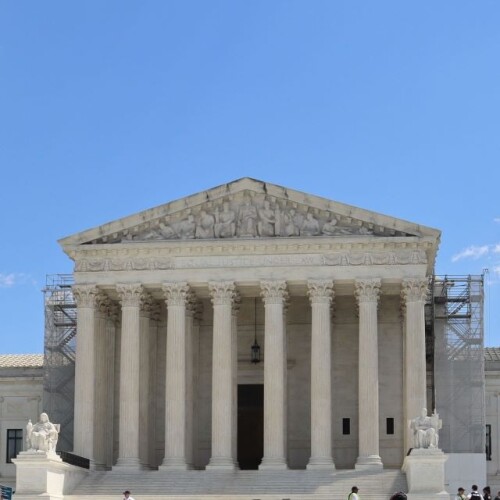
The U.S. Supreme Court reinforced the Securities and Exchange Commission's power to recover illegal profits in a case that centered on one of the agency's most potent enforcement tools.
The justices ruled unanimously Thursday that SEC doesn't have to show identifiable investor harm in order to win "disgorgement" from people and firms found to have violated federal securities laws. Justice Neil Gorsuch wrote the court's opinion.
The ruling will shape a panoply of SEC cases in which victims aren't easy to pinpoint, from low-profile record-keeping violations to major insider trading allegations. The SEC used disgorgement to secure orders for more than $6 billion in fiscal 2024 and almost $11 billion last year.
The decision ends a losing streak for the SEC at the Supreme Court, which had curbed the commission's powers three times over the past decade.
Disgorgement is distinct from civil penalties, which the agency can use as punishment if it can meet the legal requirements. The Supreme Court said in 2024 that defendants have a constitutional right to a jury trial in federal court when the commission asks for civil penalties.
The SEC said it should be able to win disgorgement without having to show identifiable investor harm, known to lawyers as "pecuniary" harm. Lawyers challenging the SEC said that approach would eliminate the distinction between disgorgement and civil penalties.
Courtesy photo
Copyright 2026 Bloomberg. All rights reserved. This material may not be published, broadcast, rewritten, or redistributed.
© Arc, All Rights Reserved. Request academic re-use from www.copyright.com. All other uses, submit a request to TMSalesOperations@arc-network.com. For more information visit Asset & Logo Licensing.