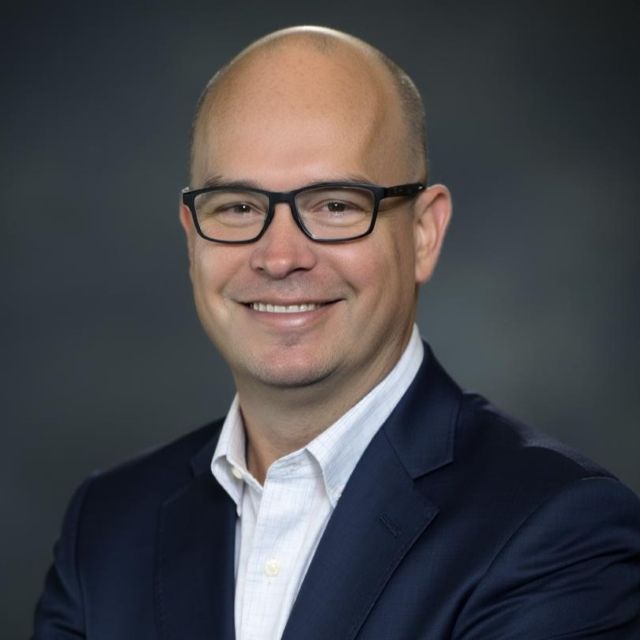
 Kirk Bell
Raymond James' independent contractor division aims to boost assets under administration by roughly $170 billion in the next four years.
To bolster that business, the firm plans to strengthen its service model for advisors and invest more in developing its own team, according to Kirk Bell, who took over as the division's president in April.
Bell — a 26-year Raymond James veteran — told ThinkAdvisor in a recent phone interview that the independent contractor division's primary growth goal is reaching $800 billion in AUA by 2030.
The division had reached $631 billion in domestic AUA at March 31, representing 8% compound annual growth from $437 billion five years earlier, according to a slide presentation Wednesday at Raymond James' analyst and investor day. The $800 billion goal represents domestic assets, as foreign assets generally lie with the firm's employee division, a Raymond James spokesperson confirmed Wednesday.
Overall, Raymond James' Private Client Group recently had $1.7 trillion in client AUA, including over $1.56 trillion in domestic assets, according to the firm. The PCG includes the independent contractor division, the employee division and RIA and custody services.
"We don't have a particular production or commission or advisory goal just because the belief is that assets will drive that (growth). And we don't have a headcount goal. So it's really focused on assets," Bell said in the interview. He said he is focused on maintaining and refining the division's current strategy, he told ThinkAdvisor.
This means strengthening the "standard of care for how we treat our financial advisors as our clients," he said. "Ultimately, what we've been trying to do here is make it simpler, trying to make it a little more consistent in terms of how we deliver on that service.
"And that's everything from general day-to-day support to practice management, coaching [and] consulting, helping people build better businesses, recruiting, continuing to make sure we're being proficient in those areas and also helping our business owners and properly managing risk to the business," Bell explained.
In terms of his own team, Bell said he wants to make sure he has "the appropriate team structure in place. We've been spending a lot of time around just role clarity and responsibilities and trying to do more, developing leaders, trying to build some depth in our team members, upskilling, education [and] making sure that we're giving them as much support as possible to develop professionally."
The goal is to make the team "a source of business advantage for our advisor business owners, giving them the tools, the authority, the confidence" to help them "deliver good outcomes for their clients," Bell said.
He also wants to protect and preserve Raymond James' culture.
While the firm grows, "we really don't want to dilute what sets us apart, which are really the relationships and the trust that we built over a number of years," so the firm and the advisors it serves can mutually succeed and win.
Bell seeks to ensure that his team is properly equipped, which could mean making sure it has the resources to structure multi-month programming for advisors who are focused on growing net new assets or who are interested in succession planning and acquisitions.
"I'm trying to start first with the team so that I can get them equipped and then get them out there meeting with and talking with advisors and then getting advisors together to have some peer-to-peer interactions," Bell said.
Like other financial services firms, Raymond James is focusing on artificial intelligence. It recently launched an AI academy to help advisors "become more proficient in how to properly leverage AI in terms of creating some efficiencies and being a little more effective with the more routine tasks, hopefully to free them up for focusing on working with their clients and having conversations and developing plans with those clients," Bell said.
The division is particularly focused on supporting advisors working with high-net-worth business-owner clients, he said.
"Many of our advisors, their higher-net-worth clients are typically business owners. And so what we continue to hear from our financial advisors is that they need more support in that area," Bell said.
They're looking closely at enhancing workplace wealth solutions, for example.
"A lot of business owners have a lot of their net worth locked up in their business. And so we continue to double down on the resources in that space. So that's going to include areas like business planning," and guiding business owners to maximize the value of their business while they continue to manage day-to-day demands, he said.
The firm also plans to build out risk-management resources to mitigate unexpected losses, and to help business owners boost their business planning strategy, not just their personal planning, Bell said. It's also exploring helping with lending and liquidity solutions to support business owners with near-term needs without disrupting long-term goals.
"And so this is going to be an ongoing project, but I would say over the next year you'll see and continue to hear more and more about Raymond James investing in this particular space," Bell said.
The division also provides equity financing to help preserve succession opportunities, so independent advisors can continue to work with clients without disruption as they prepare to pass along their businesses, Bell noted. Raymond James' Practice Capital Solutions program has closed 12 investments and has more than 100 teams in the investment pipeline for consideration.
© Arc, All Rights Reserved. Request academic re-use from www.copyright.com. All other uses, submit a request to TMSalesOperations@arc-network.com. For more information visit Asset & Logo Licensing.