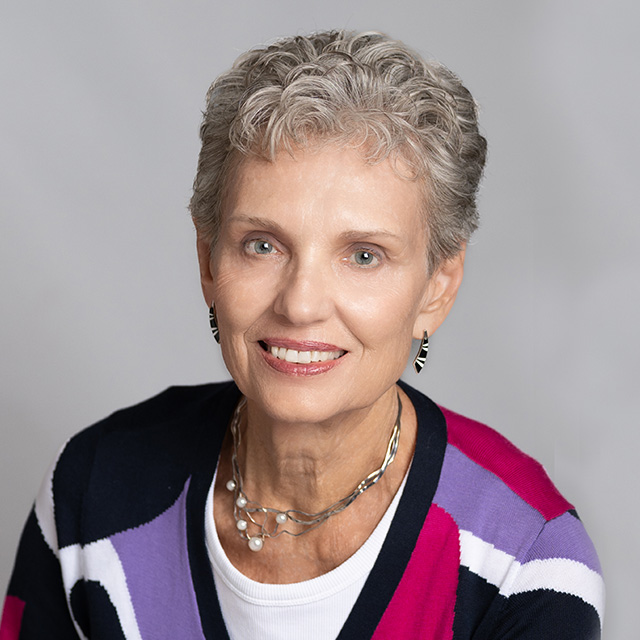
One of my recent speaking invitations was close to home in every sense of the phrase. Oak Hammock at the University of Florida, the continuing care retirement community where I live, invited me to speak about my book for widows.
The room was packed — standing-room only. Many widows attended, along with women looking ahead to a time when they, too, may face widowhood. Friends of widows came as well, wanting to better understand. A few men were there, too.
That experience reminded me that what I am doing now is not retirement in the traditional sense. It is something I have come to call reFirement: a more selective, purposeful way to continue serving.
For many financial advisors, retirement is framed as a clean break: Build the business, serve clients well, transition out and step aside.
That approach works well for many, but not for everyone.
Experienced advisors may no longer want the pace and pressure of full-time work, yet still have wisdom, perspective and purpose to offer. They may not want a full client load, a growing firm or the intensity of an earlier season. But they are not finished contributing.
A Focus on Purpose Over Busyness
ReFirement is not about staying busy for its own sake or clinging to a former identity. It is about choosing a more selective, meaningful way to continue serving.
Last year, I wrote on Nerd's Eye View about reFirement as a framework to help advisors guide clients toward retirement shaped not only by financial readiness but also by purpose, identity and meaning.
More recently, I've been reflecting on what that idea may mean for advisors themselves.
For advisors, reFirement can take many forms: mentoring younger professionals, teaching, writing, speaking, conducting focused research, serving on boards or guiding clients and colleagues in more narrowly focused but still valuable ways.
What Recent Events Reinforced
I was reminded of that again in two very different settings.
The first was a client-facing event, "Wisdom for Women: Practical Advice for Widows, Wives & Friends," hosted by Blue Trust in Greenville, South Carolina. The audience was well matched to the subject, as we focused on issues that matter deeply in women's lives: widowhood, financial confidence, planning ahead and the emotional side of major transitions.
The second was Horizons 2026, a national conference for professional advisors hosted by the American College of Financial Services. There, I joined Jean Chatzky and Lindsey Lewis on a panel discussing "The Widowhood Imperative: Strengthening Client Trust, Continuity, and Financial Outcomes After Loss."

The room was full. But what stayed with me even more were the conversations afterward.
Advisors lingered to talk about their widowed clients — tender, complicated, deeply human situations that do not fit neatly into a checklist. In hallways and over meals, they shared stories, asked thoughtful questions and made clear that they wanted to serve widowed clients well.
Advisors know that widowhood is not just a technical planning event. It is a profound life transition affecting trust, timing, decision-making, family dynamics, financial confidence and the future of the advisory relationship.
Experienced Advisors Still Matter
And that points to something else: Experienced advisors still have much to offer one another and the profession.
Younger advisors need mentors who can help them navigate not just planning strategies, but grief, family complexity, aging and trust. Firms benefit from experienced professionals who can teach, coach and model the profession's deeper values.
And audiences benefit from speakers and writers who understand that some of the most important client decisions are about far more than numbers.
Not Full-Time, Not Fully Gone
Advisors benefit as well. Leaving full-time practice can also mean leaving structure, professional identity, intellectual engagement and a sense of being needed. ReFirement offers a healthier bridge, inviting experienced professionals to ask not simply, "What am I retiring from?" but "What am I still able to contribute?"
For one advisor, reFirement may mean mentoring newer professionals a few hours a month. For others, it may mean teaching, writing occasional thought leadership articles or speaking on a subject they know deeply. For someone else, it may mean limited consulting, nonprofit board service or focused research on an issue that can help the profession evolve.
My own reFired life includes writing on selected topics, doing limited research and accepting speaking invitations when the fit is right — when the audience is well aligned, the topic connects naturally with my work or the setting holds personal value. That is not a continuation of my former career in the same form. It is a reshaping of contribution for a different season.
The question is not only when to retire. It is how to remain useful, engaged and purposeful without recreating the demands of an earlier chapter.
Kathleen M. Rehl is an author, educator, speaker and researcher focused on widowhood, later-life planning and purposeful aging. She is the author of Moving Forward on Your Own: A Financial Guidebook for Widows.
© Arc, All Rights Reserved. Request academic re-use from www.copyright.com. All other uses, submit a request to TMSalesOperations@arc-network.com. For more information visit Asset & Logo Licensing.