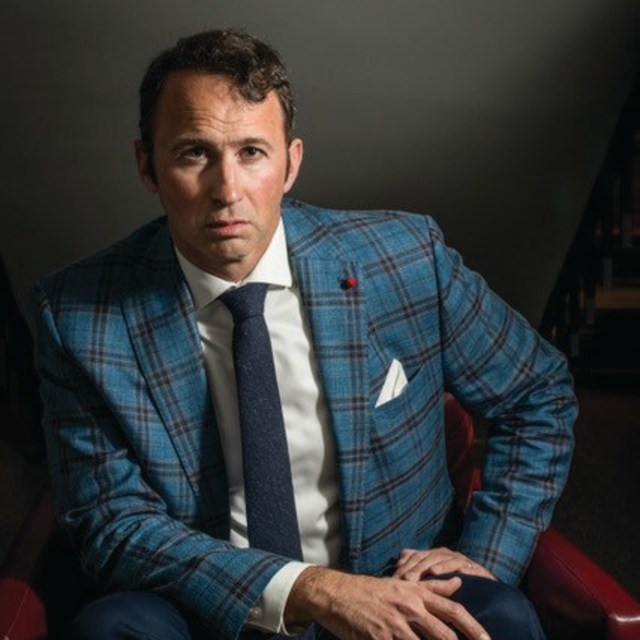
 Credit: Savannah Stringer
Conscientious advisors are versatile advice-givers in roles as varied as money managers, investors, sounding boards and psychologists.
Indeed, historian Joseph S. Moore argues in an interview with ThinkAdvisor, what an advisor does is critical to people's adapting finances to important life changes.
"Advisors are the financial first responders to the entire American economy," he says. "[They] take things that are mathematical and translate them into a world of change in real life."
Moore struggled financially until just after the global financial crisis, when he decided to immerse himself in financial research, attend financial classes and seminars, and devour financial gurus' books. The professor wound up making millions of dollars through investing and retired before age 50 from a tenured post at Gardner-Webb University.
The trick to becoming wealthy, Moore says, is to focus work-life on something you could be exceptionally good at. That improves the odds of reaping a large payout.
Moore, author of the information-packed — and often humorous — "How to Get Rich in American History: 300 Years of Financial Advice That Worked (& Didn't)," he looks at why investing in stocks isn't a guaranteed route to riches and why investors should "give annuities a chance."
Here are highlights of our conversation:
THINKADVISOR: Through a historic lens, how do advisors chiefly help people?
JOSEPH D. MOORE: Financial advisors are, in essence, change translators. Clients need a translator [to explain the human aspect]. Financial professionals have equations that work on spreadsheets, but there's no spreadsheet for a midlife crisis or a special-needs child.
So clients value that advisors add to clients' lives their ability to take these things that are mathematical and translate them into a world of change in real life.
THINKADVISOR: What can be learned from the 100-year-old advisor industry?
MOORE: People need to navigate the world of inflation and income tax because these are unnatural things. That's what advisors offer clients — the sense that they understand change.
THINKADVISOR: You recommend people becoming "value-add investors." Please explain.
MOORE: Most of the real money in the American economy is made solving someone else's problems — finding a way to solve them and to become better and better at it and get bigger and bigger rewards for solving them.
Most rich people have limited themselves to something they could be exceptionally good at and concentrated on being great at that until they've mastered it.
Then, with the money they made, they diversified by investing and got rich.
Most of the real wealth that was built in America was active income, not passive income from either passive or active investments.
The real big money is made on occasional large paydays.
THINKADVISOR: Any examples?
MOORE: When, for instance, you build a small business and you finally see the payday in real estate.
The real money in real estate was made building [the company], creating something new and eventually selling it.
Most of the truly wealthy Americans who leapt forward or got ahead were those who built their money actively.
THINKADVISOR: What are the core principles to getting ahead?
MOORE: They are: Solve problems; risk big; move more — you need to go where the opportunity is; marry well [into money or to someone who's hardworking and smart]; believe that you can get ahead; be optimistic.
Optimism is one of the most understated parts of the American economy. The Consumer Financial Protection Bureau did two studies that found the No. 1 predictor of financial wellness is a positive attitude combined with a habit of saving and some other basic habits to get ahead.
THINKADVISOR: Please elaborate on your statement that stocks won't necessarily make you rich.
MOORE: Stocks can pay out over the very long term.
Steadily investing in stocks can work very well if you have a truly long horizon. Ninety percent of Warren Buffett's net worth came after his 65th birthday.
THINKADVISOR: You recommend separating retirement savings from other investments and write that "We've turned the stock market into a retirement vehicle for the masses, which is not what it was originally built to do." Please elaborate.
MOORE: The idea of preparing for retirement is a long-standing American tradition. But the way you get wealthy is rarely through retirement savings. It's by investing in things that have large payouts.
THINKADVISOR: You write: "Give annuities a chance." On what do you base that suggestion?
MOORE: Annuities will not make you wealthy. They're for protecting your downside. [Financial] gurus are the people who most detest annuities because annuities lower your return and slow down your wealth building.
But that's not what they're for. They're for protecting you in old age so you can take risks in your young and middle years and know that you'll be fine when you retire.
Annuities are a defensive position that helps people take bigger, better and more rewarding risks in the rest of their financial life.
THINKADVISOR: You suggest that a married couple live on one spouse's income and use the other's income to invest. But they can do that only if they have a high income. Right?
MOORE: For hundreds of years, the general strategy families had was to live on the husband's income and use the wife's to get ahead.
The wife would rent out rooms in their home to boarders; and that income was, maybe, how they paid off their mortgage. Or the wife would gather eggs from a chicken coop she built herself.
Women were constantly earning money throughout American history.
Today, women are actively employed. But we forget that before the 1940s, there was another era when most women worked too.
THINKADVISOR: Some of the other historical trends that you write about are applicable today: side hustles, renting out part of your home for income. Those are being done now. Thoughts?
MOORE: Yes. They're not new at all. They're very old ways that working-class people always used to start from behind and get caught up or even get ahead.
THINKADVISOR: You write that in one sense, financial planning gurus can be "scammers" but in another, they are financial first responders. How should people make practical use of the information they impart?
MOORE: Academic finance has equations, and gurus sell hope. And hope has a pretty high return on investment in the American economy.
Gurus are there and available when, for instance, you need to know what to do [financially] about your job or having another baby.
Read the gurus' books, listen to their podcasts. But don't buy their seminars — the places where they can make a lot of money off you.
People like Clark Howard and Dave Ramsey are doing immeasurable levels of good by being available with some common-sense advice.
That's where certified financial professionals and financial advisors can really stand in the gap: Advisors are financial first responders to the entire American economy.
Credit: Savannah Stringer
© Touchpoint Markets, All Rights Reserved. Request academic re-use from www.copyright.com. All other uses, submit a request to TMSalesOperations@arc-network.com. For more information visit Asset & Logo Licensing.