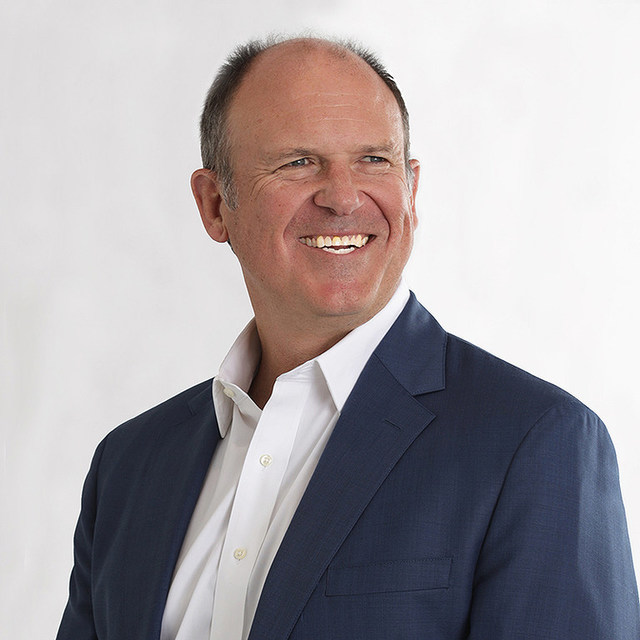
Ultra-high-net-worth clients often push their advisors for information that will provide them with a deeper understanding of their investment activity. And that's a good thing, according to Spuds Powell, managing director of Kayne Anderson Rudnick Investment Management.
Such clients' expectations are "extremely high. They are relentless in their pursuit of excellence," he notes in an interview with ThinkAdvisor. Though challenging, "the changes and enhancements have helped me become a better advisor [and my firm] a better wealth management company."
Powell, recently named to Barron's Top Advisors list for the 13th consecutive year, reveals some clients' specific demands and gives his take on how the stock market could potentially behave this year. Hint: The big technology leaders will no longer dominate.
Here are highlights of our conversation:
THINKADVISOR: How can difficult clients turn out to be influential mentors?
SPUDS POWELL: I think of those as being some of my very best clients. They’ve not only helped me become a better advisor but helped [my firm] become a better wealth management company because their expectations are extremely high.
They’re relentless in their pursuit of excellence.
Although many of their requests and demands have been challenging to comply with, these clients think out of the box; they don’t necessarily accept the status quo.
They feel we can do something better or differently that will benefit them.
THINKADVISOR: Have you found that some of their demands can work for other clients as well?
POWELL: Yes. They’ve had such great ideas that ultimately we ended up adopting some of the new approaches for all our clients.
THINKADVISOR: You have an ultra-high-net-worth clientele. I would think these folks are really demanding. Is that so?
POWELL: It’s one thing to have demands that are reasonable, even if they’re very difficult or time-consuming to comply with. In other cases, we’ve had clients that had unreasonable demands.
THINKADVISOR: What’s an example of the latter?
POWELL: Something that isn’t useful or helpful or [far too] time-consuming.
THINKADVISOR: What are examples of clients’ demands that have been helpful?
POWELL: Preparing customized reporting, which clients have found to be very informative and helpful.
Though this required us to do things differently than in the past. We’ve now rolled out customized and enhanced reporting to all our clients based on a specific request from one client.
Sometimes the report pertains to performance; in other instances, it’s tax-related information. Or it can be holistic about the client’s total financial well-being by combining information on all their assets and liabilities.
THINKADVISOR: What other special requests have been made?
POWELL: One client really challenged us to provide him and his wife with a rationale for investment changes that, in their best interest, we implement to asset allocation or specific investment products they have.
They want a very thorough, detailed description. They really want to know our due diligence and vetting processes to understand when, how and why we’ll recommend such changes.
THINKADVISOR: Are clients forthright in their requests, or do they complain about something and wait passively for you to change it?
POWELL: Clients put it this way: For their financial well-being, they would like us to perhaps make an exception for them and do something differently in order to have a better understanding.
In most cases, it’s not because they’re unhappy with the status quo. It’s that they’ve concluded there may be a better, different or enhanced way for us to help them.
THINKADVISOR: What are your expectations for the market this year?
POWELL: There’s a threat and nervousness around the potential for an AI bubble bursting or a rotation out of the Magnificent Seven and the really well-performing AI-related stocks — and what that could entail.
We’ve recently seen a pretty dramatic broadening of the stock market. For three years, the entire market was basically pulled forward by seven U.S. large-cap technology stocks. In the last two or three months, we’ve started to see many other types of stocks outperforming those mega-cap stocks.
We’ve seen industries other than technology, and small-cap and some value stocks start to do well.
I would much rather invest in the equity market when different types of companies are performing well than just the tiny niche environment we’ve been in. Part of the capital market was dramatically outperforming everything else.
THINKADVISOR: What brought about the broadening?
POWELL: A major part of it has to do with valuations. The Magnificent Seven stock valuations started to look quite rich and expensive, while many other types of equities looked more attractively priced.
As I’ve said, there’s this growing wave of nervousness around an AI bubble. And given the massive amount of investment the Magnificent Seven stocks have made in AI infrastructure, investors are starting to focus more than ever on how much of a return on that investment these businesses can realistically expect to generate.
And will it be enough to justify the massive amount of capital expenditures?
THINKADVISOR: What else do you see?
POWELL: For the last few years, the mega-cap technology stocks have been growing their earnings and profits at a really robust pace: 20%, 25%, 30% per year. That’s one of the primary reasons their stock returns have been so strong.
Other asset classes — small-caps, for instance — haven’t been growing earnings at anywhere near that pace.
So for 2026, the bar has been set very high for the mega-cap technology stocks’ ability to continue to grow their profits at a healthy pace.
But the bar has been set relatively low for small-cap and mid-cap stocks’ ability to generate a significant, meaningful increase in their earnings.
Also, we expect a continuation of a trend that started close to a year ago: a reduction of [financial] regulation, which is beneficial for businesses. As the cost to comply with regulation comes down, it tends to help corporate profits.
THINKADVISOR: What other factors in the U.S. economy are significant?
POWELL: We still have major debt issues. There’s still the potential that we’ll see a spike in inflation.
So there’s a lot of risk out there but also a lot of potential tailwinds; from tax refund checks, for example, which could contribute to a wave of consumer spending.
THINKADVISOR: Are any clients disoriented about what’s going on in the world — politics, wars, the general chaos? If so, does that affect their investing?
POWELL: Many of my clients are confused and and/or upset. I have conversations every day from an investment point of view to address their confusion or why they’re nervous. Thankfully, they aren’t inclined to change their investment strategy based on [emotion].
But the challenge people face today is that there’s a lot of confusion and uncertainty about the future.
So I’m spending a lot of time providing clients with irrefutable facts to help them think about that uncertainty with a more practical, balanced approach.
I’m helping them realize that yes, there are bad things that could happen; but there are also really good things that may happen. It’s important to be balanced.
THINKADVISOR: President Donald Trump will soon nominate a new Federal Reserve chair. What characteristics would your ideal person have?
POWELL: Somebody who’s totally committed to maintaining the Federal Reserve Bank’s independence. I feel very strongly about the importance of the Fed being independent and not being influenced by politicians.
I’m optimistic and confident that, with a 12-person committee, the Fed will behave just that way after the new chair takes office.
© Arc, All Rights Reserved. Request academic re-use from www.copyright.com. All other uses, submit a request to TMSalesOperations@arc-network.com. For more information visit Asset & Logo Licensing.