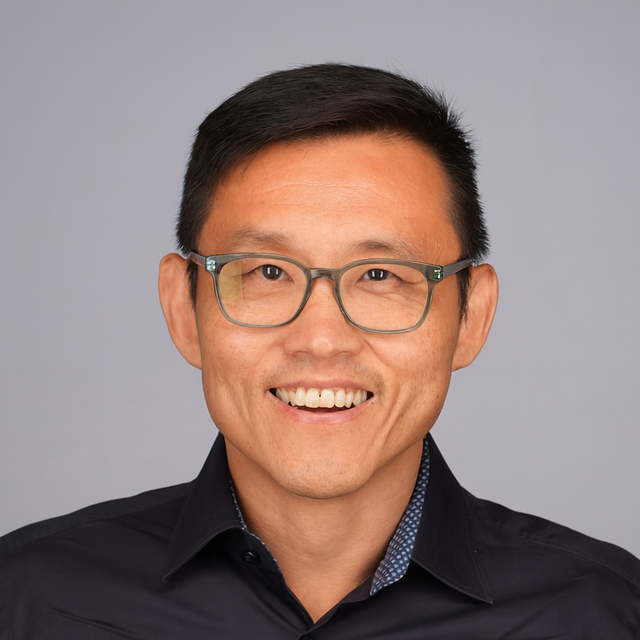
 K. Jeremy Ko
K. Jeremy Ko, founder of ShoreUp Retirement Solutions, and Harry Mamaysky, professor of professional practice at Columbia Business School, were recently honored by the Financial Planning Association in its 2025 best research awards.
While Mamaysky’s paper on what he calls the “really modern portfolio theory” details how risk levels can be moderated by investing in low-cost, liquid and transparent exchange-traded funds while avoiding extreme positions and responding to changing market conditions, Ko’s work gets to the heart of retirement planning: When should clients nearing and entering retirement claim Social Security? And what factors should be used to inform their decision?
As Ko writes, personalized lifespan estimates for clients represent a significant — and largely untapped — opportunity to improve claiming decisions. On average, the paper shows, such estimates can improve claiming strategies to the tune of $9,000 for women and $12,000 for men compared to non-tailored approaches.
As Ko told ThinkAdvisor during a recent interview, personalized longevity assessments can not only improve retirement income planning but also enhance investor security and, therefore, the planner-client relationship.
Here are some highlights from our conversation, edited for length and clarity.
THINKADVISOR: Can you tell us about how you got into financial planning? I believe you studied physics in college, right?
JEREMY KO: Yes, that’s right. I was very interested in physics research during my undergrad, but I pretty quickly realized I wasn’t going to be the next Albert Einstein. I realized I would need to find a more practical way to apply my knowledge, and this was at the time when college graduates with applied mathematics degrees were being recruited to Wall Street firms to work on developing derivatives and options trading.
I thought that was interesting and potentially lucrative, so I ended up switching to high finance and then went to grad school. Funny enough, though, I was pulled back towards the research and academic track anyway.
I moved through a few roles early in my career before I ended up working as an economist at the Securities and Exchange Commission, and over time my interest really shifted to financial planning. I think that mostly happened because, when I moved to D.C. and eventually started a family, I just found myself making all these big financial decisions without a lot of guidance. How should I save for retirement? How should I set up my investments? How much life insurance should I buy?
Well, to answer those questions, I got really interested in building my own digital tools and models, which is what eventually led to the creation of ShoreUp Retirement Solutions. I like to describe the firm as a financial technology company which creates and deploys predictive machine-learning models for retirement planning and other goals.
THINKADVISOR: Can you tell us a little more about the firm and how its solutions can be used by planners?
KO: Yes. Take the longevity projection topic, for example. Our models and technology can be used to show with a high degree of confidence how long people should be expected to live based on things like their current health status, their college education level, whether or not they smoke, what genetic conditions they might have, and more. Based on that prediction, you can then feed the information into your retirement planning modules in a constructive way.
Generally, if you’re expected to live a long time, you’ll naturally need to generate more savings for retirement. You’ll also likely need a lower initial withdrawal amount than someone with less longevity, all else being equal. These personalized inputs can be very powerful in terms of optimizing retirement income plans.
THINKADVISOR: That speaks directly to the findings in your paper, which we’ll discuss. But first, what have you learned about the challenges of discussing longevity and mortality with advisors and clients?
KO: You know, I think that advisors actually have more trouble bringing up mortality and lifespan questions than most clients do. Where clients can have difficulty is in navigating feelings of shame associated with things like smoking, but beside that, they’re pretty open about these discussions. I mean, the life insurance market is huge, so that shows people aren't adverse to thinking about their own mortality.
Most of the discomfort I see is on the side of the financial advisor just as it pertains to even broaching the topic with clients. I like to tell advisors that there are ways around this, for example by inviting the client to use some kind of longevity projection interface to enter their private information without having to necessarily share it or talk about it in depth with the advisor. That's one way advisors can introduce these things into their process.
THINKADVISOR: Do you think advisors struggle with the ambiguity of lifespan projections and their inability to provide concrete answers?
KO: Yes, I think there is some of that going on, as well. But the good news is that advisors can develop expertise here fairly easily just by doing a little training and research.
A little bit of learning on the topic goes a long way, and I’m happy to see that there’s movement towards advisors becoming more holistic in their approach and being more willing to go into areas like health and wellness planning.
At the very least, advisors should understand that they are in general going to be serving a population that is better educated and that has healthier lifestyles and longer longevity. Of course, some clients will have genetic conditions to consider, and others may not be taking good care of themselves. That’s why individual projections are so important, which is why we put together the paper.
THINKADVISOR: What do you hope that readers will take away from the paper?
KO: The short answer is that they should know this kind of personalized approach to Social Security planning and income planning in general isn’t so hard to deliver. The topic of income planning has its complexity, but taking a personalized approach doesn’t have to be a big burden. It's the natural next step in terms of where a financial planner should want to take their process.
The simple story with Social Security is that people who live longer should claim later, usually at 70, if their goal is to maximize the amount of benefits they expect to receive. People who expect to live less should claim earlier, possibly as early as 62 in some cases.
That’s all pretty well understood, but actually plugging longevity projections directly into the Social Security claiming process and the overall plan is the key insight here. It’s about going beyond blanket rules of thumb or just using the same longevity assumption of 90 or 95 for every single client you serve despite their major differences in lifestyle and realistic longevity expectations.
If you are an advisor, you can use our platform or another platform to generate reliable longevity estimates using as many or as few variables as you think is reasonable. You can even do a lot with just self-reported smoking information, subject health status and college education levels.
Inputting these variables will give you a longevity projection that can be five, 10 or 15 years of different from a blanket assumption of 90 or 95, and that in turn can have a major effect on the planning decisions you make. It can inform when you claim Social Security and help client couples gain literally tens of thousands of dollars of additional benefits.
THINKADVISOR: Have you been inspired or supported by other retirement researchers in the process of putting together this paper? I think you were in contact with David Blanchett, for example?
KO: Yeah, I would particularly highlight David’s influence.
I initially asked David to work on this project with me, but he’s just so busy with his own research and his day job working in the industry. But he didn’t miss a beat in introducing me to my co-authors, and he’s just been so supportive throughout the process in terms of sharing his thoughts and knowledge.
And it’s not just with me, as you know. David is a real pillar of financial planning education and mentorship to people coming into this industry. It’s really a special thing.
THINKADVISOR: What other topics are you interested in researching or working on?
KO: In general, it’s this idea of how we can use predictive analytical models to better inform our financial planning decisions.
For example, there’s a lot of platforms out there today that offer tech for retirement income tax optimization. That’s very important, of course, but what you don’t see nearly as much of are tools that can do things like offer up meaningful individualized predictions of the potential long-term care needs of a given client couple. I’m a big believer in finding new and helpful ways to integrate these types of things into the financial planning software that advisors use. That’s what ShoreUp is all about.
On a related front, I’d also point to the growing use of agentic artificial intelligence in this space. It’s an obvious direction and lots of advisory firms want to go down that route. The problem is that the basic large language models that exist today have major limitations in terms of their financial planning capabilities.
ChatGPT can give you a pretty good answer when it comes to a single technical question, for example about what are the rules when it comes to claiming Social Security. What it is not good at is doing the actual math when it comes to looking as things like your own personal earnings history, your current financial situation, and how you can optimize your claiming decision against other considerations like long-term care needs.
I’m very interested in the opportunity to better connecting agentic AI with the powerful calculators and modules that financial planners are using today. I see a huge opportunity there.
Pictured: K. Jeremy Ko
© Arc, All Rights Reserved. Request academic re-use from www.copyright.com. All other uses, submit a request to TMSalesOperations@arc-network.com. For more information visit Asset & Logo Licensing.