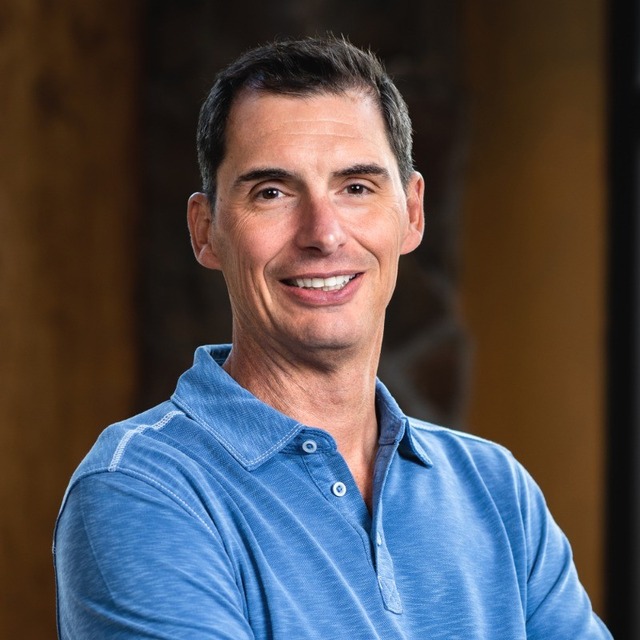
 Gene Farrell, CEO of Vanilla
Other milestones include the January rollout of V/AI Copilot, an assistant for financial advisors driven by artificial intelligence, as well as the recent opening of a waitlist for Vanilla Starter, described by the firm as a “groundbreaking solution” designed to make professional estate planning services accessible for boutique RIA firms.
Speaking recently with ThinkAdvisor, Vanilla CEO Gene Farrell said the firm just set a quarterly record for new client acquisitions, and the future for estate planning technology distribution “couldn’t be brighter.”
“We’ve come a long way since I joined the organization four years ago, but I really see us as being in the second or third inning of what we believe we can accomplish,” Farrell said. “Many advisors claim to offer estate planning but often just refer clients to attorneys. They’re missing a chance to add far deeper value. Estate planning is a major untapped growth opportunity for advisors.”
As Farrell recounted, forward-thinking firms are embracing the idea of transforming estate planning into a scalable, advice-driven service that boosts loyalty and referrals. The only way to do this effectively, he contends, is to use the power of technology.
“For advisors, embracing technology is essential,” Farrell said. “It’s either modernize or risk becoming obsolete.”
Here are highlights from the conversation, edited for length and clarity.
THINKADVISOR: It’s been about a year since we last spoke about the ongoing development of the Vanilla platform and the topic of estate planning in general. Can you reflect on the last year and the pretty steady rollout of new features and partnerships?
GENE FARRELL: Yes, it’s hard to believe how fast time can fly by, and thanks for the question. I’ll answer it by taking a step back and noting that it’s been about four years now since I took on the CEO role at Vanilla.
At that time, estate planning for advisors was still kind of viewed as a novel thing and a new space. Of course, estate planning isn’t a new concept by any means, but the idea that it was in the purview of financial advisors wasn’t really a common perspective yet. I mean, you would call up advisors and they’d say to us, well, this is interesting but shouldn’t you really be reaching out to attorneys?
Fast-forward to 2025 and the conversation has completely changed. More and more advisors have started to understand the power of estate planning and how much clients value it. Being a part of delivering that value is really meaningful and fun.
I can share an anecdote with you that’s interesting, as well. Early on in my tenure we were working with a large enterprise customer and they did a small pilot program with us. That went well, but they ended up undergoing some significant management changes and it really put the program on pause for a while.
Recently, the new management team came back to us and they wanted to rerun the pilot program. Well, during the pilot, they landed a $300 million client thanks largely to the Vanilla-powered estate plan that an advisor developed for them. That’s a really eye-opening case study, because I think some people in the advisor industry still might underestimate just how powerful helping people build and understand a legacy plan can be.
THINKADVISOR: What can you tell us about the types of firms and executive leaders who are embracing estate planning as a core part of their client acquisition strategy?
FARRELL: It’s a diverse set of clients, frankly, and the pace of new deals and new customers continues to accelerate. We’ve just had our strongest quarter to date in terms of new logos, and we have a large number of enterprise deals expected for Q4. People are really catching on here.
I come from a technology background, as you know, and you often see a pattern when you are creating a successful new technology business. When you first start with a new technology, most of your early customers are forward-thinking tech adopters. They just have a mindset where they are focused on innovation and they have a tolerance for using and helping to develop young software.
That was the case for us early on, but what we’re seeing now is that it is the mainstream advisors who are coming on board. That’s really exciting for the business, but it also means we need to respond by working to improve the intuitiveness of the platform so that it can deliver more immediate value for new users who might not be the most tech-savvy advisors out there.
That isn’t a unique challenge for estate planning technology, necessarily. Across many different technologies, you see a pretty significant difference between a new user and a power user in terms of the value they can derive from the platform. We’re hard at work today figuring out how to shrink that gap as much as we can.
THINKADVISOR: Why did the firm seek a patent for a key part of its technology?
FARRELL: The reality today is that most patents are really designed to be defensive. For us, we felt it was a super important step, because we believe we are the innovator in this space. We saw from very early on that there are lots of people claiming to be doing what we’re doing.
We’ve created something that a lot of people said was impossible. They said the tax calculations are too hard, or that we weren’t going to be able to make it easy enough for advisors to actually want to use. So, it’s been a lot of development and work, and there’s a level of validation that comes with the patent.
Frankly, some other providers out there have been playing it a little fast and loose with directly copying our visual designs and making claims about doing something we’ve invented. It’s baseball playoff season, and I think about this patent as a high inside pitch that says: Do your own innovation.
Of course, competition is good for the customers and end users, but we want to see people competing in a fair way.
THINKADVISOR: On a personal basis, how would you describe your collaboration and relationship with Vanilla’s founder Steve Lockshin?
FARRELL: Steve has been amazing to work with. He’s a legend in the industry and he brings such a wealth of knowledge and experience to the table.
These days, he’s not an active employee of the company, but he sits on the board and is still involved in an important way in guiding the company. As I noted, my background is much more on the building companies and software side, so I’m focused on building for scale, thinking about pricing and packaging, etc.
Steve has the real insights on how to build for the end customer and user, so we collaborate closely on where to prioritize our efforts and making sure we’re meeting clients wherever they are in their estate planning journey — regardless of wealth level.
THINKADVISOR: The firm recently rolled out an AI-powered copilot to help advisors use the platform. At a high level, how important do you think artificial intelligence will be in both Vanilla’s future and the broader future of the wealth management industry?
FARRELL: Very important, is my short answer. At Vanilla, we’ve got a bunch of new stuff coming out between now and the end of the year to make it even easier to use the platform and to improve the visualizations and all of that. AI is core to how you take something as complex as estate planning and make it accessible to every advisor and every client.
That being said, AI in general is also reshaping how people work, what they spend their time on, the type of work that they do, etc. For the wealth management industry, I suspect it will increase the pressure on advisors to do more for their clients beyond just basic investments.
I also think about how AI intersects with the megatrends in wealth management, especially with all the consolidation that’s happening. It’s fascinating. I’ve only worked directly in this industry for four years now, but I’m already recognizing that there seems to be an ebb and flow of advisors breaking away, then reconsolidating, then breaking away again.
I think the nature of that fluidity leads to really strong opportunities to reshape the landscape and how clients are served. I don’t know exactly what our space looks like in 10 years, but between the constant tech innovation and the consolidation that’s happening, we’re going to see some really interesting and exciting developments — and ultimately a new level of service that tomorrow’s clients are going to expect.
Pictured: Gene Farrell
© Arc, All Rights Reserved. Request academic re-use from www.copyright.com. All other uses, submit a request to TMSalesOperations@arc-network.com. For more information visit Asset & Logo Licensing.