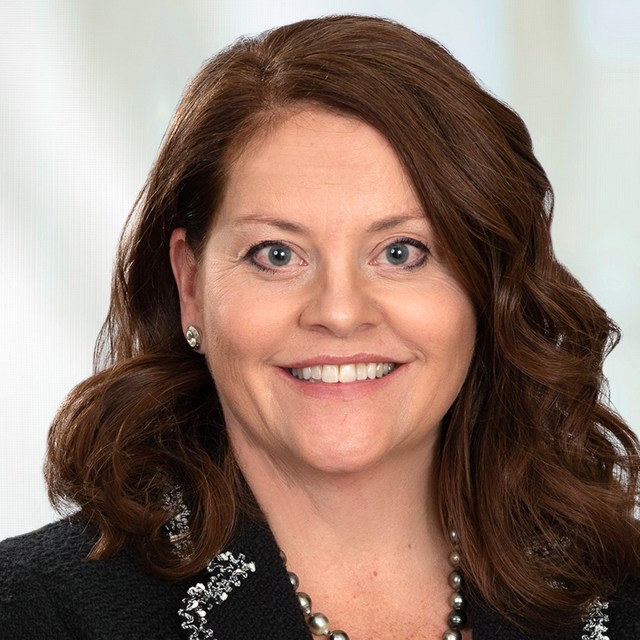
 Tasha Dickinson
Clients planning to retire to Florida are looking forward to sunny beaches and palm trees. Advisors are entrusted with keeping those dreams from turning into nightmares of family battles and lawsuits.
One important step, according to Tasha Dickinson, partner at Day Pitney, a law practice specializing in high-net-worth clients: Be sure to make them aware of Florida’s estate laws and work with an attorney to draft an appropriate estate plan.
“Estate planning documents aren’t invalid because they were executed in another state,” Dickinson tells ThinkAdvisor in an interview. “The problem is that there are nuances in Florida law … that are unique to the state.”
Dickinson, a wills, trusts and estate lawyer based in West Palm Beach, notes that there is no need for a client to sever the relationship with an existing advisor when relocating to Florida.
Indeed, she says, “Some of the institutional knowledge [they] have is really important to the process.”
In the interview with Dickinson, who focuses on serving family offices, she explains that if estate plans don’t conform, the death of a family patriarch or matriarch could set off fireworks among siblings. Further, she explains why, in Florida, a best friend would never qualify to serve as the executor of an estate.
Here are highlights of our conversation:
THINKADVISOR: If a client is going to retire to Florida, how does that affect their estate plan?
TASHA DICKINSON: Florida has a couple of laws that are unique to the state.
I like to work with clients when the thought comes into their mind that they may want to move to Florida. Then I come up with a timeline of how that transition is going to happen and when.
I go through the process with them of where you are now, where you want to be, and let’s create a reasonable timeline for getting there.
THINKADVISOR: You have a team that works with clients on these issues. Who’s on the team?
DICKINSON: The trifecta is the financial advisor, estate planner and CPA.
A financial advisor is a very important part of the process. They understand the nature of the assets — how they’re titled [and so on]. The CPA understands what the picture looks like from an income tax point of view.
If insurance is involved, we might have the insurance broker as part of the team.
As an attorney, I draft the estate plan.
THINKADVISOR: Should the advisor, planner and CPA be the professionals who are serving the client in the state from which they’re moving, or should they be Florida-based?
DICKINSON: It could be either. If someone I’m working with from New York, let’s say, has a beloved financial advisor there, it isn’t necessary to upend that relationship — or every relationship a person has — in order to move to Florida.
In fact, I would argue that some of the institutional knowledge of the people who have been working with the client is really important to the process. I like to have the benefit of the historical advisors.
THINKADVISOR: What if someone retires to Florida and then the advisor they had in their former state retires?
DICKINSON: I’ll probably suggest that the client replace them with someone in Florida so we can strengthen the ties to Florida for tax purposes.
THINKADVISOR: What’s so different about Florida’s estate laws?
DICKINSON: Estate planning documents aren’t invalid because they were executed in another state.
The problem is that there are nuances in Florida law that make these documents less complete than they should be.
THINKADVISOR: Such as?
DICKINSON: There are very specific laws pertaining to a person’s homestead — their primary residence.
So it’s important that homestead laws be taken into account when establishing an estate plan. If you have a homestead in Florida, you cannot have a homestead in another jurisdiction.
There are advantages to someone declaring their property as their homestead. No. 1 is a decrease in property taxes. No. 2 is that the property is not subject to the claims of creditors.
THINKADVISOR: What’s the other law that’s specific to Florida?
DICKINSON: There are restrictions on who can serve as the personal representative of the estate — some states call that the executor — who is responsible for administering the estate.
In Florida, the role is limited to someone who is either related to the deceased by blood or someone who’s a Florida resident.
THINKADVISOR: Do these issues crop up frequently in your work with family offices?
DICKINSON: Sure, because if a family office is headquartered in Connecticut, say, and the principals are migrating to Florida individually, the next logical question should be: Is the family office migrating to Florida as well?
THINKADVISOR: What’s the typical answer?
DICKINSON: It’s very case-specific. If it’s a single family office, the answer is often yes because there would be no need to operate a business out of Connecticut, for example.
In fact, it could be detrimental from a tax point of view when the principals are Florida residents.
THINKADVISOR: Many clients have second homes or vacation homes in Florida. How does that affect their estate plans?
DICKINSON: If it’s not your primary residence, then it’s not homestead property, and the rules regarding homestead do not apply.
For instance, if someone has a vacation home in Florida but they’re a resident of, say, Boston.
THINKADVISOR: What if a client retires to Florida but knows beforehand or decides later to move back to their home state in a short time? Do they need to change their estate planning documents?
DICKINSON: If the person is moving from Maryland, for instance, and knows it’s temporary, the documents executed in Maryland are valid in Florida.
So they would have to decide if it’s worth changing the documents. The answer may well be no.
THINKADVISOR: What can throw an estate plan off-track and trigger family disputes?
DICKINSON: We often see that coming up in blended families, where each spouse has children from a prior marriage.
There’s a propensity for those family members to fight when the death of one of the parents occurs.
We try to mitigate those types of disputes by having clear directions through the estate planning documents.
Obviously, disputes occur in all types of family situations. But I think there’s a higher rate of fighting when a blended family is involved.
What I see over and over again is that money brings out the absolute worst in people. Sometimes the death of a family member is the catalyst to wake up fights that have been hibernating for a very long time.
The role of the estate planner is to foresee the disputes that might be coming down the pipeline and try to mitigate them so that families aren’t ripped apart.
THINKADVISOR: What happens if a family trust was executed in another state and the trustee or trustees retire to Florida?
DICKINSON: If it’s valid from the state from which you came, it will be honored in Florida. Estate planning documents are not invalid because they were created and executed in another state. The problem is the nuances in Florida law.
THINKADVISOR: But should people amend them or redo them to be certain they’re OK?
DICKINSON: At a very minimum, they should have someone who practices law in Florida look at them to be sure they make sense under Florida law.
For instance, if someone coming from New York names their best friend as personal representative — executor — and they move to Florida, that person wouldn’t qualify to serve as personal representative in Florida.
So they could simply do an amendment to change who’s named. But if the changes are more significant, a restatement might be in order.
Sometimes people like to change their documents entirely when they come to Florida because they’re now domiciled here.
So if they claim they’re domiciled in a certain jurisdiction, it would stand to reason that their legal documents should be prepared and executed in that jurisdiction.
THINKADVISOR: What about advance directives and powers of attorney? Does Florida have laws about health care documents that are different from most other states?
DICKINSON: All those documents are valid if they were valid in the states from which the person moved.
However, especially with health care documents, I always encourage clients, at a bare minimum, to sign health care documents in the state where they’re going: You don’t want your family having to negotiate with a medical facility or doctor regarding the validity of your health care documents.
THINKADVISOR: Which ones does Florida have?
DICKINSON: There are two basic documents. One is for a health care surrogate, someone to make health care decisions on behalf of a person. That can be effective immediately or on the incapacity of the person signing it.
We also have an end-of-life document — a living will — which says a person does not wish to be kept alive artificially when there’s no reasonable medical probability of their recovery.
But such documents are statutory creatures. So if I draft one in Florida, it’s going to look very different from what gets drafted in Colorado or Maine, for example.
THINKADVISOR: Should you change these documents if you’re moving to Florida?
DICKINSON: Yes. I even have some clients who have multiple sets of health care documents for each state they spend time in.
© Arc, All Rights Reserved. Request academic re-use from www.copyright.com. All other uses, submit a request to TMSalesOperations@arc-network.com. For more information visit Asset & Logo Licensing.