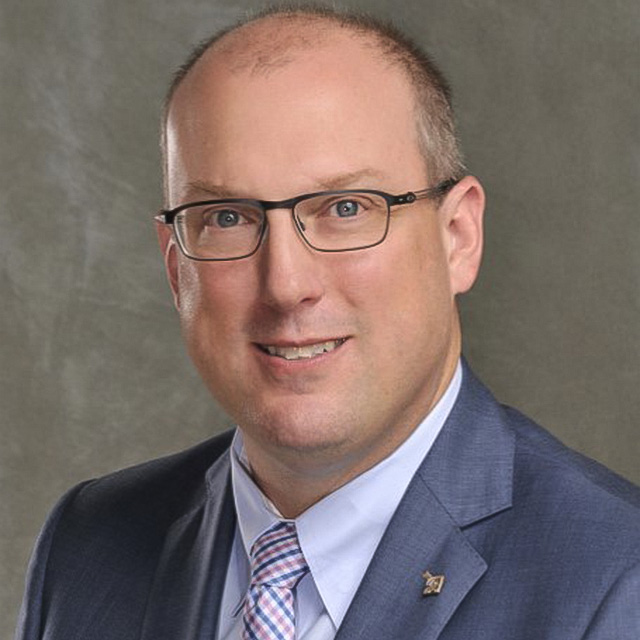
Edward Jones, the financial firm founded more than a century ago, is deep into a push to attract big producers and high-net-worth clients, That's evidenced, according to Jason Henderson, a firm principal who leads advisor growth and innovation, by its 60% to 70% payout and its first private client service, launched in March.
The firm has more than 4,000 million-dollar producers and a total of $2.4 trillion in assets under care.
“Five or six years ago, top producers weren’t even returning our phone calls ... Today, top producers are calling us and asking how we are rewarding our financial advisors,” Henderson says in an interview with ThinkAdvisor.
In a robust recruiting effort, the firm has been adding advisors, while its retirement transition program provides for planned attrition, according to the executive. The firm has 20,429 advisors.
"Our financial advisors feel valued, recognized and appreciated," he maintains.
In the interview with Henderson, who was an advisor at Edward Jones for 17 years and also a recruiting leader, he discusses the firm’s teaming approach and an upcoming program for new hires to become part of a team immediately upon joining the firm. Henderson also reveals other approaches to retain advisors in a long-term plan involving “2030 Ambitions,” as it is dubbed.
Here are highlights of our conversation:
THINKADVISOR: What is Edward Jones doing specifically to recruit financial advisors?
JASON HENDERSON: We’re paying 60% and 70% to advisors. That certainly raises some eyebrows and gains some attention.
According to [surveys], we have the highest payout in the industry between production levels of $600,000 and $2 million gross production on an annual basis.
THINKADVISOR: What are you doing to retain advisors?
HENDERSON: With our commitment to that compensation, our financial advisors feel valued, recognized and appreciated; and our retirement transition plan is certainly starting to move the needle in our recruiting efforts.
Five or six years ago, top producers weren’t even returning our phone calls. Two to three years ago, they started having conversations with us.
Today, top producers are calling us and asking about how we are rewarding our financial advisors with compensation, benefits and recognition. This is at a time when it seems that a lot of the industry is starting to pull back and change compensation grids.
THINKADVISOR: You lead advisor growth and innovation. What’s an example of an innovation?
HENDERSON: In 2026 we’re rolling out a teaming entry for our new financial talents. That’s something we haven’t done at scale in the past. It’s certainly something that’s attractive to the current talent pool out there. And it’s something that our financial advisors are asking for as well.
THINKADVISOR: Please explain what’s going on at Edward Jones regarding attrition and advisors.
HENDERSON: Most recently, we have looked at ways to increase retention at all points in the financial advisor’s career.
Another way we’ve invested in our advisors is through our retirement transition plan. The retirees are now hitting that two-year completion point, where they are rolling off our count.
This was a planned attrition that was directly attributable to the retirement transition plan, which increased substantially [with advisors] in 2023. So succession planning is something we take very seriously.
We have seen an uptick as we have prepared our own advisors for succession planning, and we expect that we will move the industry as well.
THINKADVISOR: What is the average-size practice at the firm?
HENDERSON: We have over 4,000 advisors that are $1 million producers. We just crossed over the $10 million mark. We have practices now that are over $1 billion.
With over 4,000 million-dollar producers, that is certainly a scale and scope that many of our competitors can’t represent.
THINKADVISOR: Do you still have one advisor per office?
HENDERSON: We have over 5,000 advisors now that are in a teaming arrangement, shared office, shared support. And that number is rapidly growing.
THINKADVISOR: Why did you go to the team approach?
HENDERSON: We’re offering choice, flexibility and autonomy for our advisors to make that decision.
We have not moved away from the single-advisor, single-branch model, which many of our advisors prefer.
THINKADVISOR: Do the advisors still cold-prospect by knocking on doors of local entrepreneurs?
HENDERSON: That’s an interesting industry perception. We are not marching through corn fields, knocking on people’s doors and selling “A”-share retail mutual funds.
It’s almost comical how often that perception comes up. But at conferences people now say, “I didn’t understand what was going on at Edward Jones that’s new.”
And that has attracted recruiting attention we were not getting four or five years ago.
THINKADVISOR: Your bio says that advisor growth will continue to be a key focus to achieve the firm’s “2030 ambitions.” What are they?
HENDERSON: We plan to have $4 trillion in client assets under care by 2030. We now have $2.4 trillion. Another ambition is related to how the client views their personal goals, hopes and dreams being fulfilled with the services and advice that we offer. Eighty percent of our clients are moving toward that.
THINKADVISOR: Is the expansion of product important to mention when recruiting?
HENDERSON: That extensive product suite, the teaming expansion, the ways we are creating more autonomy for advisors to run their practice, are things about Edward Jones that we were not providing 10 years ago.
THINKADVISOR: On the other side of the coin, some of your advisors do decide to leave. What would prompt that?
HENDERSON: We’re at historic 20-year lows in overall attrition. So even though some of the retirement projections were known and expected, we do occasionally lose an advisor that we would have preferred to continue to partner with. We’re certainly not seeing any themes in exit interviews.
© Arc, All Rights Reserved. Request academic re-use from www.copyright.com. All other uses, submit a request to TMSalesOperations@arc-network.com. For more information visit Asset & Logo Licensing.